
TEEN HEALTH EXPLAINER · SLEEP, STRESS & THE JAW
Sleep, Stress and Bruxism
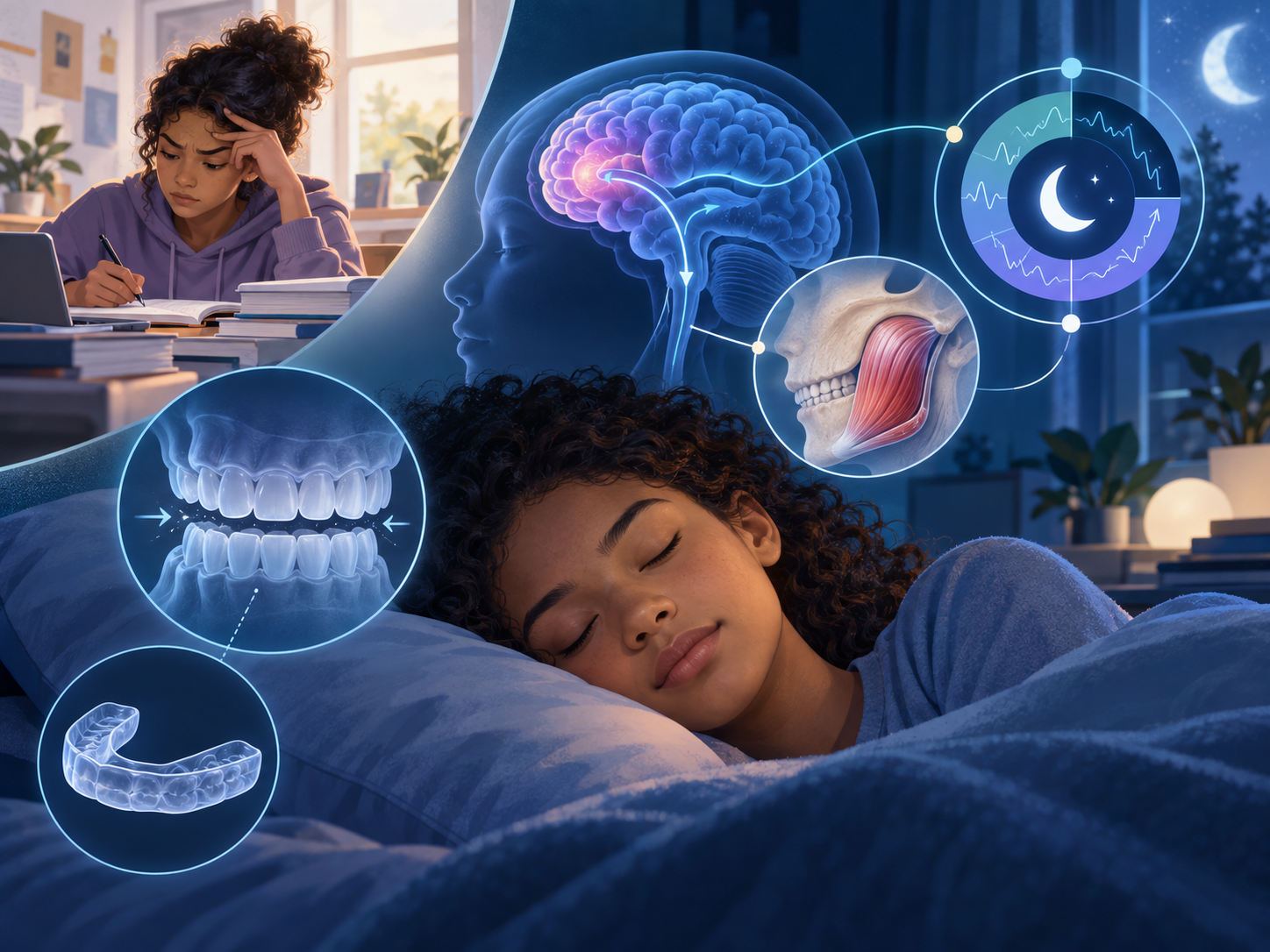
Bruxism means grinding, clenching or thrusting the jaw. It can happen while awake or asleep, and stress is one possible influence—not the only explanation.
What is it?
Bruxism is repeated jaw-muscle activity such as clenching or grinding. Many people do it without noticing, particularly during sleep.
How can it affect the mouth?
Possible signs include jaw tiredness or pain, headaches, tooth sensitivity, worn or cracked teeth and disturbed sleep. Mild or occasional bruxism may cause no damage.
How does it develop?
Bruxism has several possible influences, including stress, sleep problems, genetics, caffeine, smoking and some medicines. It is not simply a sign that someone is “too anxious”.
What lowers the risk?
Regular sleep, relaxation strategies and reducing evening caffeine, alcohol and tobacco may help. A dentist can advise whether a custom mouth guard is appropriate to protect the teeth.
When should you ask for help?
See a dentist for tooth damage or sensitivity, ongoing jaw, face or ear pain, frequent headaches, or if someone hears you grinding during sleep.
MYTH
“Grinding your teeth always means you are stressed.”
FACT
Stress may contribute, but sleep, medicines, substances, genetics and other factors can also be involved.
WHAT THE EVIDENCE SAYS
Bruxism is multifactorial and not every case needs treatment. Assessment focuses on symptoms, tooth wear, jaw muscles and—when appropriate—sleep-related factors.
This explainer is for education, not diagnosis. A healthcare or dental professional can consider your symptoms, history and local testing options confidentially.