
TEEN HEALTH EXPLAINER · SMOKE, VAPOUR & HEALTH
Smoking and Vaping: What Changes?
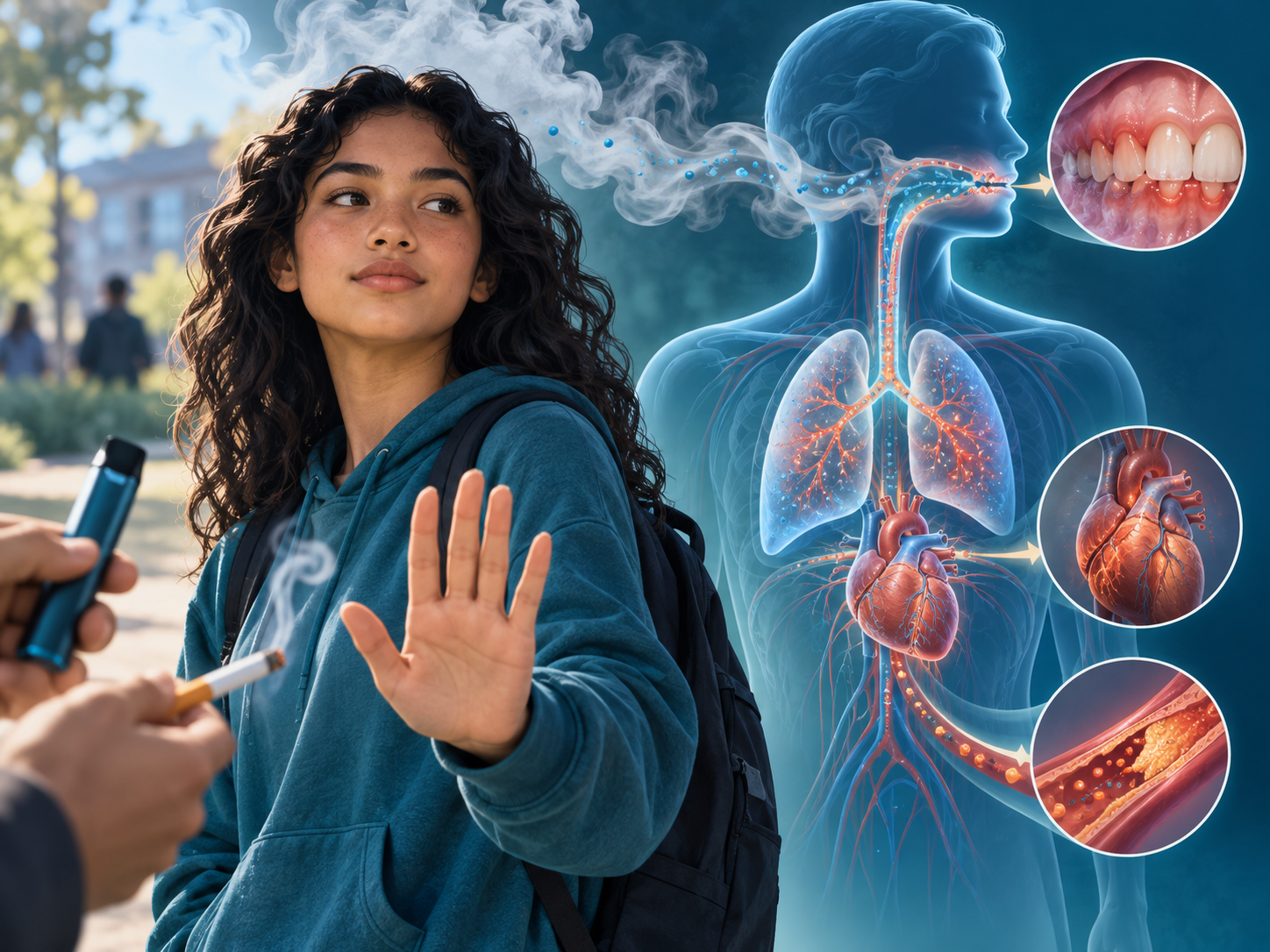
Cigarettes and vapes are different products, but “different” does not mean harmless. Their effects begin at the mouth and can extend far beyond it.
What is it?
Cigarettes burn tobacco and create smoke. E-cigarettes heat a liquid to create an aerosol. Most vapes contain nicotine, which is highly addictive.
How can it affect the mouth?
Smoking is a major risk factor for gum disease. Smoke and aerosol can expose oral tissues to irritants, while nicotine use can make dependence harder to break.
How does risk develop?
Risk is shaped by what is inhaled, how often, for how long and whether products are combined. E-cigarette aerosol may contain nicotine, fine particles, metals and other potentially harmful substances.
What lowers the risk?
For teenagers, not starting is the safest option. If nicotine use has already begun, asking for support is a practical health decision—not a failure.
When should you ask for help?
Ask a healthcare or dental professional about cravings, difficulty stopping, mouth changes, chest symptoms or concerns about a product. Support can be tailored without judgement.
MYTH
“It is only water vapour, so vaping is harmless.”
FACT
E-cigarettes create an aerosol, not harmless water vapour. It can contain nicotine and other potentially harmful substances.
WHAT THE EVIDENCE SAYS
The long-term effects of vaping are still being studied. Current evidence is enough to show that e-cigarettes are not safe for young people and that nicotine can harm the developing adolescent brain.
This explainer is for education, not diagnosis. A healthcare or dental professional can consider your symptoms, history and local testing options confidentially.