
NOVEMBER 2026 · MOUTH CANCER AWARENESS MONTH
Know the signs.
Act on persistence.
Across November, Mouth Cancer Action Month encourages people to recognise unusual changes, reduce preventable risks and seek professional assessment without delay. It is a charity campaign organised by the Oral Health Foundation—not an official WHO observance.
Visit the official Mouth Cancer Action Month campaign →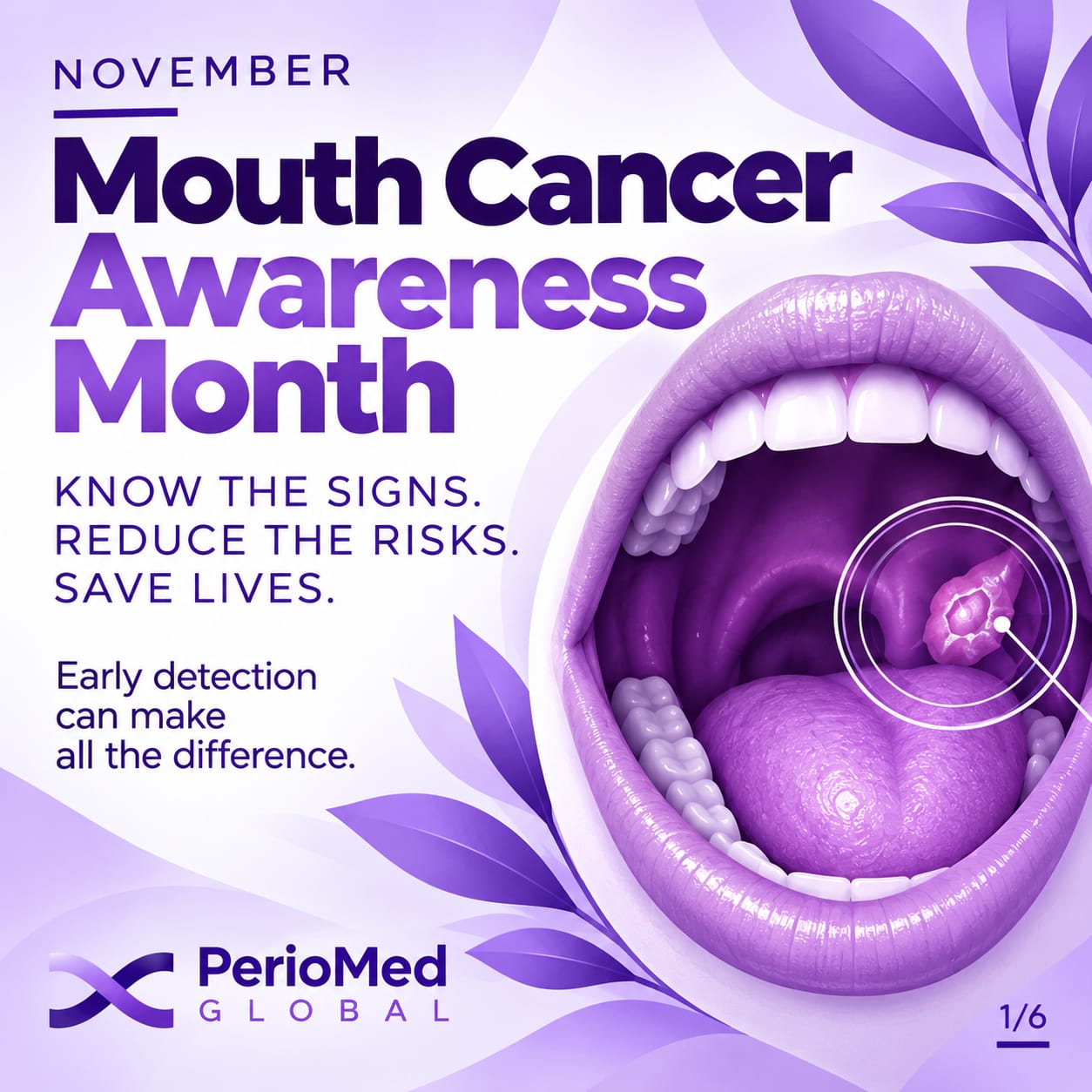
01 · WHY THIS MONTH MATTERS
Awareness becomes useful when it leads to action.
Global estimates from IARC GLOBOCAN 2022 refer specifically to lip and oral-cavity cancers. Oropharyngeal cancer is recorded separately, which matters when discussing HPV and prevention.
02 · KEY WARNING SIGNS
A change that lasts
deserves a check.
These symptoms are common and often have causes other than cancer. Their presence is not a diagnosis. The important signal is a change that persists, progresses or cannot be explained.
An ulcer that does not heal
A mouth sore or ulcer still present after three weeks deserves professional assessment.
A red, white or mixed patch
A persistent change in colour or texture inside the mouth should not be self-diagnosed.
A lump or swelling
This may appear in the mouth, lip, face, jaw or neck and may or may not be painful.
Difficulty speaking or swallowing
Persistent pain, hoarseness, altered speech or difficulty moving the tongue or jaw should be checked.
Unexplained bleeding, numbness or pain
Ongoing symptoms or altered sensation need clinical evaluation, especially when they are new.
A change that persists
Most oral changes are not cancer. Persistence, progression or uncertainty is the reason to act.
03 · WHAT SHAPES RISK
Risk is not one thing.
Tobacco, alcohol and areca nut are among the best-established preventable causes worldwide. Other factors depend on cancer site, exposure and individual context.
Tobacco
Smoking and smokeless tobacco are established causes. Stopping use reduces the elevated risk associated with exposure.
Alcohol
Risk rises with alcohol exposure and is especially important when combined with tobacco.
Areca nut and betel quid
Use with or without tobacco is a major cause of oral cancer in several world regions.
HPV and anatomical site
High-risk HPV is an established cause of many oropharyngeal cancers, especially at the tonsils and base of tongue; this is not the same as every oral-cavity cancer.
Ultraviolet exposure
Long-term sun exposure increases the risk of lip cancer. Lip protection matters, particularly for outdoor workers.
Diet, age and health context
A diet low in fruit and vegetables has been associated with risk, while age, cumulative exposures, social conditions and access to care also shape outcomes. This evidence is not equivalent to the established causal evidence for tobacco, alcohol and areca nut.
04 · WHAT THE EVIDENCE SAYS
Early recognition matters.
Screening claims need precision.
Reducing exposure reduces risk.
IARC concludes that stopping tobacco, alcohol or areca-nut use reduces the elevated oral-cancer risk associated with those exposures.
Clinical screening is not one-size-fits-all.
IARC reports that clinical oral examination may reduce oral-cancer mortality in high-risk populations. This does not automatically support population-wide screening in every setting.
A visual check cannot confirm cancer.
Dentists and doctors can identify suspicious changes and arrange referral. Diagnosis usually requires specialist assessment and tissue sampling.
Oral cavity is not the same as oropharynx.
HPV is strongly linked to cancers at the tonsils and base of tongue. Site-specific language prevents inaccurate risk messages.
05 · PREVENTION IN PRACTICE
What you can do.
- 01Be tobacco-free.
Avoid smoked and smokeless tobacco. Ask a healthcare professional about evidence-based cessation support.
- 02Reduce alcohol exposure.
Less is safer for cancer prevention. Tobacco and alcohol together create particularly important risk.
- 03Avoid areca nut and betel quid.
These products increase risk even when tobacco is not added.
- 04Support broader prevention.
Follow national HPV-vaccination recommendations, protect the lips from prolonged UV exposure and choose a balanced diet rich in fruit and vegetables.
- 05Keep regular dental care connected.
Dental visits are an opportunity for mucosal examination, risk discussion and referral—but they do not replace acting on a new symptom between visits.
- 06Notice, do not self-diagnose.
Check the lips, tongue, cheeks, gums, floor and roof of the mouth. If something unusual persists, seek professional advice.
SOURCES & FURTHER READING
Read the evidence.
Educational content only. This page does not provide an individual diagnosis or replace medical or dental advice. Most oral changes are not cancer, but persistent or concerning symptoms should be assessed by a qualified professional.