
14 NOVEMBER 2026 · WORLD DIABETES DAY
Diabetes care
includes the mouth.
World Diabetes Day is an opportunity to support awareness, timely diagnosis and continuity of care. Oral health belongs in that conversation: diabetes and periodontitis can influence one another, and coordinated prevention matters.
Explore the IDF Diabetes Atlas →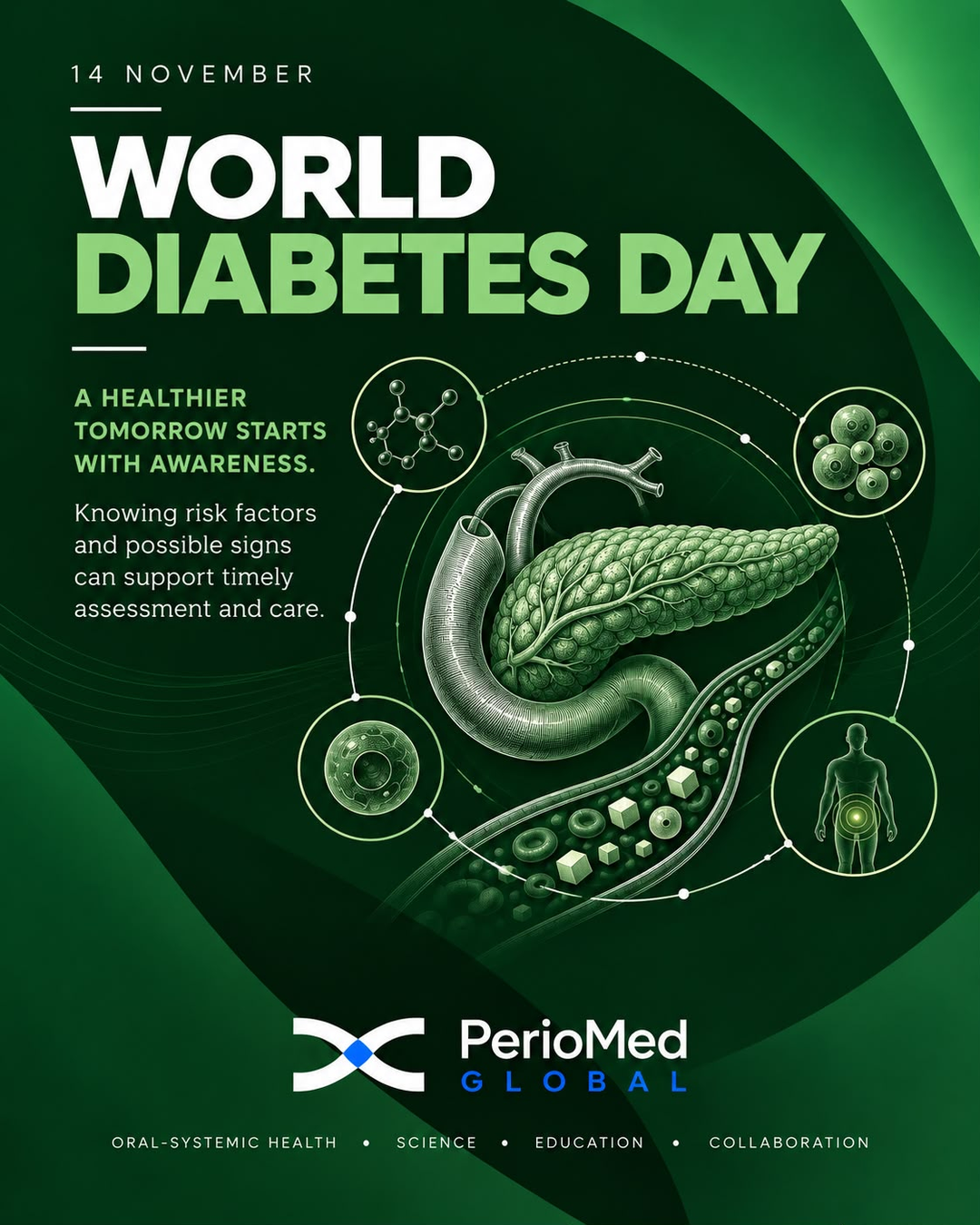
01 · WHY THIS DAY MATTERS
A global condition.
A growing care challenge.
Figures: IDF Diabetes Atlas, 11th edition. Estimates and projections describe populations, not individual risk.
02 · THE ORAL–SYSTEMIC CONNECTION
Two connected conditions.
Not one simple cause.
Diabetes—especially when glycaemic control is poor—is an important modifier of periodontitis risk and severity. Periodontitis is also associated with systemic inflammation and greater difficulty maintaining glycaemic control. These connections support integrated care, not oversimplified claims.
Diabetes can alter the response to plaque biofilm.
Changes in immune function and inflammatory regulation can make periodontal tissues more vulnerable to breakdown.
Inflammatory pathways can reinforce one another.
Hyperglycaemia, advanced glycation end-products and periodontal inflammation may interact within a wider biological network.
Healing may be less predictable.
Vascular and metabolic changes can influence tissue repair, which makes prevention, treatment and maintenance especially important.
Plaque biofilm still matters.
Diabetes does not replace the local microbial trigger of periodontitis. Daily plaque control and professional care remain central.
03 · WHAT THE EVIDENCE SAYS
Periodontal treatment may support glycaemic control.
A 2022 Cochrane review found moderate-certainty evidence from 30 trials and 2,443 participants with diabetes and periodontitis, compared with no active treatment or usual care.
This is an average research estimate, not a guaranteed result for every person. Periodontal treatment improves local periodontal health and may contribute to glycaemic management, but it does not replace diabetes medication, monitoring or medical care. Evidence on longer-term diabetes complications remains limited.
04 · ORAL SIGNALS WORTH CHECKING
Do not wait for pain.
These signs do not diagnose diabetes and may have several causes. They are reasons to seek an oral-health assessment, particularly when they persist.
Bleeding gums
Bleeding during brushing or interdental cleaning can be a sign of gingival inflammation and deserves attention when it persists.
Swelling or tenderness
Red, swollen or tender gums should not be accepted as normal, particularly when diabetes is present.
Recession or tooth mobility
Gums pulling away from the teeth, changes in the bite or loose teeth require periodontal assessment.
Persistent bad breath
Persistent halitosis may have several causes, but it can accompany periodontal inflammation and should be evaluated.
05 · PREVENTION IN PRACTICE
One patient.
One coordinated plan.
- 01Keep diabetes care on track
Follow the individual medical plan and attend regular checks. Oral care complements—not replaces—diabetes treatment.
- 02Clean every day
Brush thoroughly with fluoride toothpaste and clean between the teeth using the method recommended by the oral-healthcare team.
- 03Ask for a periodontal assessment
People living with diabetes should receive regular oral and periodontal evaluation, with treatment and maintenance when needed.
- 04Connect the care team
Dentists, physicians, diabetes teams and patients can share relevant information and coordinate follow-up.
- 05Support overall prevention
Avoid tobacco and follow evidence-based advice on diet, physical activity, medication and weight management.
- 06Act on changes early
Do not wait for pain. Persistent bleeding, swelling, recession, mobility or delayed healing should be professionally assessed.
SOURCES & FURTHER READING
Read the evidence.
Educational content only. This page does not diagnose diabetes or periodontal disease and does not replace individual medical or dental advice. People with symptoms, known diabetes or concerns about oral health should seek assessment from qualified professionals.