
29 SEPTEMBER · WORLD HEART DAY 2026
Don’t miss
a beat.
World Heart Day brings global attention to cardiovascular disease, prevention and timely action. The World Heart Federation’s 2026 campaign asks people to recognise warning signs, protect their hearts and demand equitable access to cardiovascular care.
Visit the official World Heart Federation campaign →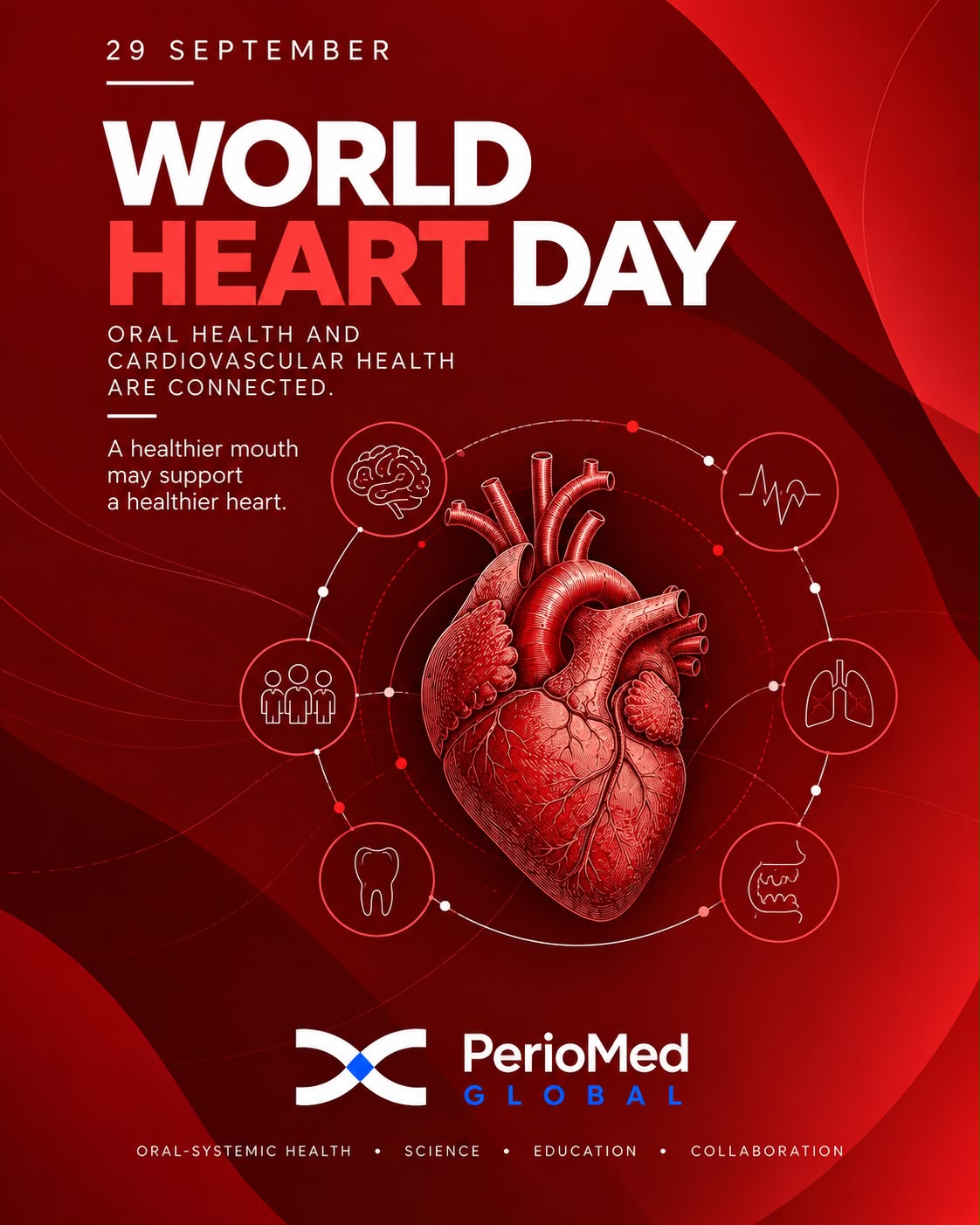
WHY THIS DAY MATTERS
Heart health belongs within whole-person health.
Cardiovascular diseases remain the leading cause of death globally. Many important risk factors — including tobacco use, unhealthy diet, physical inactivity, raised blood pressure, diabetes and obesity — also matter to oral health. Protecting the heart therefore means looking beyond one organ and strengthening prevention across the whole person.
THE ORAL–CARDIOVASCULAR CONNECTION
What connects the mouth and the heart?
Shared risk factors
Tobacco exposure, diabetes, obesity, dietary patterns and social determinants can influence both periodontal and cardiovascular health. Prevention strategies may therefore benefit more than one part of the body.
Chronic inflammation
Periodontitis is a chronic inflammatory disease of the tissues supporting the teeth. Systemic inflammation is also involved in atherosclerotic cardiovascular disease, creating a biologically plausible area of interaction.
Microbial and vascular pathways
Inflamed periodontal tissues can allow microbial products and inflammatory mediators to reach the circulation. These exposures may interact with endothelial function and vascular inflammation, but plausibility alone does not prove causation.
Association is not causation
Research consistently reports associations between periodontitis and cardiovascular disease. Shared risk factors and other confounders remain important, and periodontal disease has not been proven to directly cause cardiovascular events.
PREVENTION IN PRACTICE
Protect your mouth. Protect your heart.
- Care for your mouth.Brush twice daily with fluoride toothpaste, clean between the teeth and seek professional care for bleeding, swollen gums or other persistent symptoms.
- Be tobacco-free.Avoid smoking and other tobacco exposure, and seek evidence-based support if you need help stopping.
- Know your numbers.Check blood pressure, blood glucose and cholesterol according to professional advice.
- Support cardiovascular health.Stay active, eat a balanced minimally processed diet and follow prescribed preventive or medical care.
- Recognise warning signs.Chest pressure or pain, severe shortness of breath, fainting or other concerning symptoms require urgent medical assessment.
- Connect your care.Tell dental and medical professionals about relevant diagnoses, medicines and risk factors so care can be coordinated safely.
SOURCES & FURTHER READING
Read the evidence.
Educational content only. This page does not provide individual medical or dental advice. Seek urgent medical help for symptoms that may indicate a cardiovascular emergency.