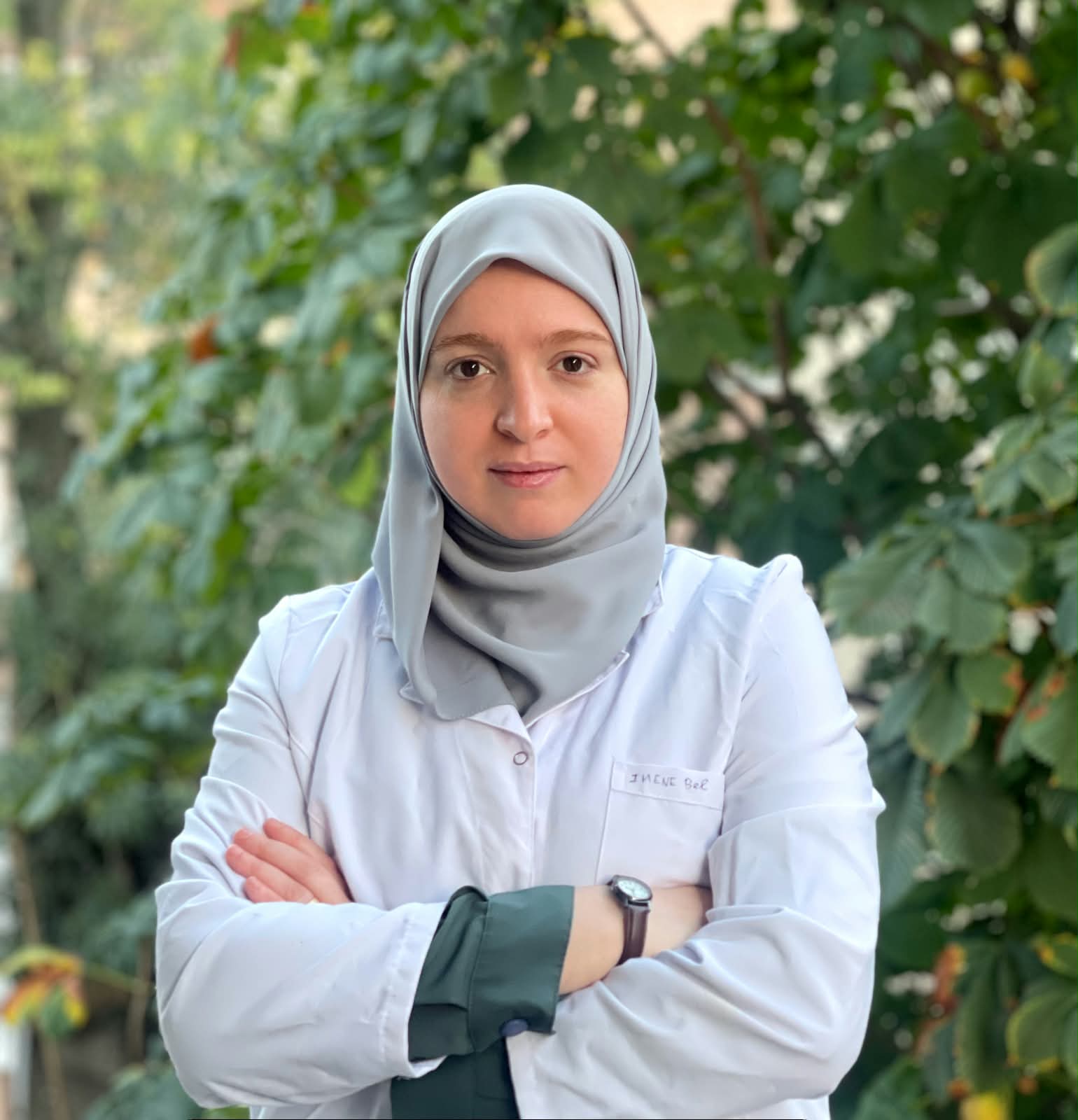
FIRST AUTHOR · ORAL & PERIODONTAL SCIENCESImene Belhout, DMD, MScAlgeria
 Originals
ORAL MICROBIOME · NEUROINFLAMMATION · CAUSALITY
Current evidence and proposed mechanisms.

ABSTRACT
The oral microbiome may interact with neurological health through inflammatory, microbial, neural and metabolic pathways. Research has examined links with Alzheimer's disease, Parkinson's disease, stroke and mood disorders.
The evidence is not all of one kind. Experimental models support biological plausibility; human studies mainly show associations; genetic analyses are inconsistent; and interventional evidence has not established neurological benefit. This review asks what each layer of evidence can—and cannot—tell us.
FOUR PROPOSED ROUTES
These pathways may overlap. For most, direct human evidence remains limited.
Microbial products and host mediators may enter the circulation and influence vascular and inflammatory signaling. [2] [18]
Trigeminal and olfactory pathways are anatomically plausible, but direct microbial dissemination remains insufficiently demonstrated in humans. [2]
Swallowed oral bacteria may alter gut microbial and inflammatory networks. Cross-sectional data cannot establish temporal direction. [1] [3]
Metabolites and microbial structures may modify systemic immune responses, but their oral-specific contribution is not yet resolved. [1] [4]
ALZHEIMER'S DISEASE · THE BEST-STUDIED CASE
Strength at one level does not automatically carry over to the next.
Porphyromonas gingivalis, gingipains and inflammatory pathways have been studied in brain tissue and experimental models. Commercial connections and model limitations matter when interpreting the findings. [5] [17]
Supports a hypothesisRecent longitudinal syntheses link periodontitis and tooth loss with later cognitive outcomes, but heterogeneity, residual confounding and reverse causation temper causal interpretation. [7] [8]
Does not prove directionAtuzaginstat did not meet its co-primary endpoints in the overall GAIN population. LHP588 is under evaluation in the phase 2 SPRING trial; efficacy remains unknown. [11] [12]
The clinical test remains openBEYOND ALZHEIMER'S
Cross-sectional metagenomic findings link oral-to-gut translocation and virulence patterns with cognitive impairment. The design cannot determine cause or consequence. [3] [16]
Periodontitis and post-stroke cognitive impairment have been linked, but vascular, metabolic and social determinants complicate direct microbial interpretations. [14] [15]
Stress, oral-care behavior, periodontal inflammation and microbial composition may interact. Cross-sectional taxa differences do not establish a microbial cause of symptoms. [4] [13]
Autism spectrum disorder, bipolar disorder, schizophrenia and epilepsy have been discussed, but current evidence is insufficient for causal or therapeutic claims. [2]
ASSOCIATION DOES NOT MEAN CAUSATION
PRACTICAL IMPLICATIONS
Connected biology deserves connected research—and proportionate clinical language.
Good oral hygiene and appropriate periodontal care remain important for oral health, function and quality of life. Current evidence does not establish that these measures prevent neurodegenerative disease.
Interdisciplinary collaboration may improve care when neurological conditions make daily oral hygiene or access to treatment more difficult. It should not be presented as a basis for unvalidated neurological screening in dental settings.
Probiotics, prebiotics, dietary strategies and pathogen-targeted therapies remain investigational for cognitive outcomes.
WHAT THE NEXT STUDIES MUST DO
Measure oral health and the microbiome before neurological symptoms emerge.
Use consistent periodontal, cognitive, clinical and biological endpoints.
Run randomized studies powered for meaningful neurological outcomes.
Triangulate primary, genetic, mechanistic and trial evidence without recycling assumptions.
THE BOTTOM LINE
The science is strongest when it distinguishes what is biologically possible, what is observed in people and what has been changed successfully in a trial.
Plausibility opens the question. Causal evidence must answer it.
REFERENCES